Student movements have long served as catalysts for social and political change in India. From the pre-independence era to contemporary times, campuses have been breeding grounds for activism that extends far beyond university gates. These movements have not only shaped education policies but have also influenced broader political narratives and democratic participation.
The Anti-Hindi Agitation in Tamil Nadu (1965)
The anti-Hindi imposition movement in Tamil Nadu remains one of the most significant student-led protests in post-independence India. When the central government attempted to make Hindi the sole official language in 1965, students across Tamil Nadu erupted in protest, fearing the marginalization of Tamil language and culture.
The movement saw widespread participation from college students who organized strikes, processions, and demonstrations. The intensity of the protests, which tragically resulted in several self-immolations and deaths, forced the central government to reconsider its language policy. This led to the Official Languages Act being amended, ensuring that English would continue as an associate official language indefinitely.
The movement's impact extended beyond language policy. It strengthened regional identity politics in India and demonstrated how student activism could influence national policy. The protests also propelled the Dravadian movement into mainstream politics, reshaping Tamil Nadu's political landscape for decades.
The JP Movement and Student Involvement (1974)
The movement led by Jayaprakash Narayan, commonly known as the JP Movement, saw massive student participation, particularly in Bihar and Gujarat. Initially starting as protests against rising prices, corruption, and misgovernance in state universities, it evolved into a broader movement against the central government.
Students from Bihar and Gujarat universities formed the backbone of this movement, organizing rallies, strikes, and civil disobedience campaigns. The involvement of students gave the movement its youthful energy and moral authority. This eventually contributed to the political upheaval that led to the Emergency in 1975 and subsequently the defeat of the Congress party in 1977.
The JP Movement demonstrated how student activism could transition from campus-specific issues to broader political movements, establishing a template for future youth-led political engagement.
The Mandal Commission Protests (1990)
When the V.P. Singh government announced the implementation of the Mandal Commission recommendations for reservation in government jobs, it triggered nationwide student protests, particularly in urban areas and elite institutions. Students opposed to the increased reservations argued about merit and opportunities, while counter-protests supported social justice measures.
The movement was complex, revealing deep societal divisions along caste lines. Students from forward castes led demonstrations, including some extreme acts of self-immolation, while students from backward classes organized counter-movements supporting the reservations. Universities became battlegrounds for competing visions of social justice and meritocracy.
This movement forced a national conversation about affirmative action, social justice, and equality of opportunity. It influenced political alignments and policy debates that continue to resonate in Indian politics today.
The Rohith Vemula Protests and Campus Freedom (2016)
The institutional death of Rohith Vemula, a Dalit PhD scholar at the University of Hyderabad, sparked nationwide student protests focusing on caste discrimination, institutional bias, and freedom of expression in universities. Students across India organized solidarity marches, demanding justice and reforms in university administration.
The movement brought issues of caste discrimination in higher education to national prominence and sparked debates about institutional autonomy, student rights, and social justice in campuses. It led to widespread discussions about mental health support for students and the need for anti-discrimination mechanisms in educational institutions.
The Fee Hike Protests at Various Universities
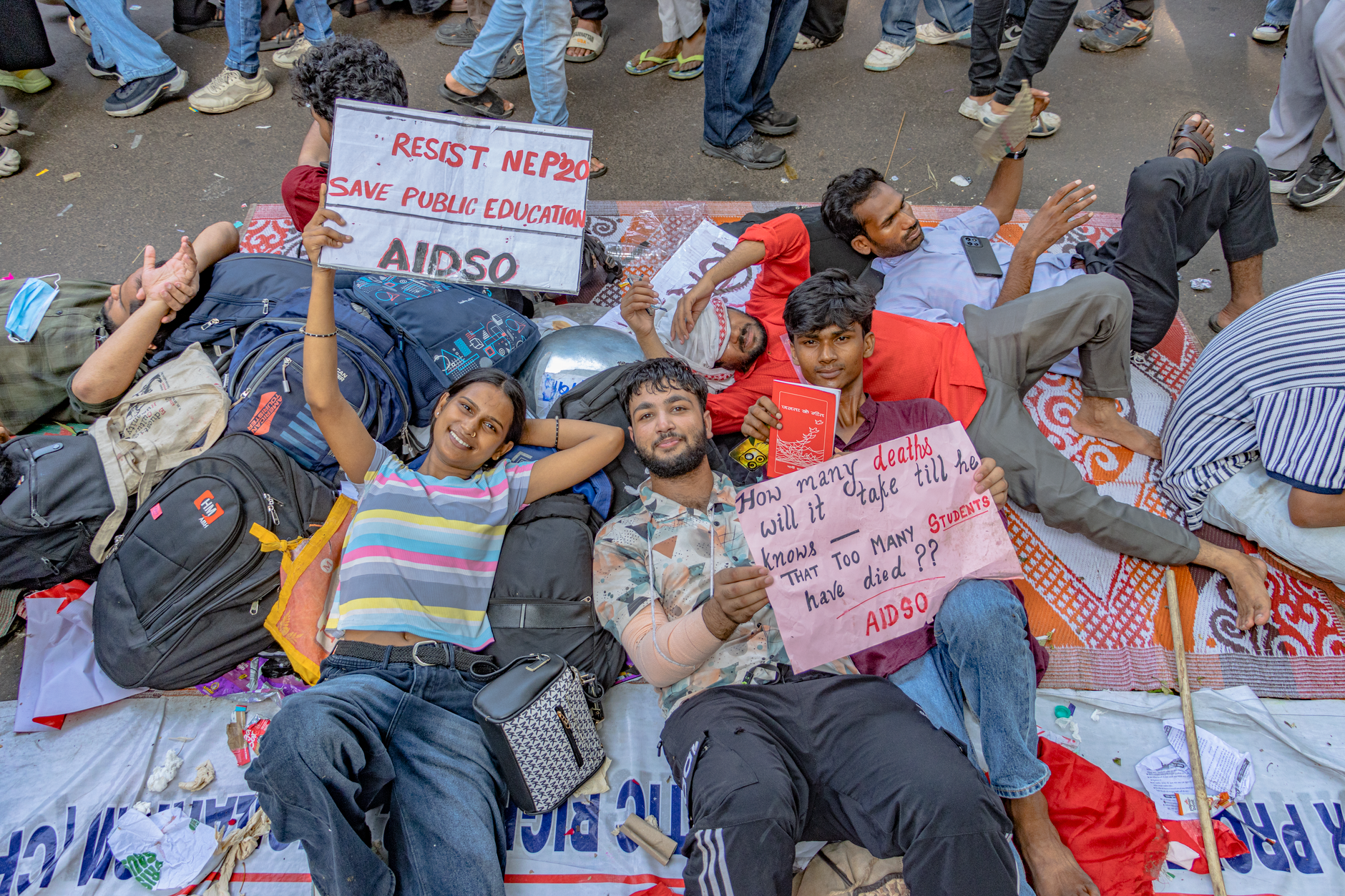
Multiple universities across India have witnessed sustained student movements against arbitrary fee hikes, from JNU's protests in 2019 to similar movements in TISS, Hyderabad Central University, and others. These movements have highlighted the increasing commercialization of education and concerns about access and affordability.
Students have organized innovative forms of protest, from hunger strikes to social media campaigns, drawing public attention to how rising costs exclude students from marginalized communities. These movements have often succeeded in rolling back fee hikes partially or completely, demonstrating the power of organized student advocacy.
The Lasting Impact
These student movements share common threads: they begin with specific grievances but often evolve to address broader societal issues. They demonstrate how educational institutions serve as spaces for political consciousness and democratic participation. Most importantly, they show that student activism remains a vital force in shaping India's democratic discourse and policy direction.